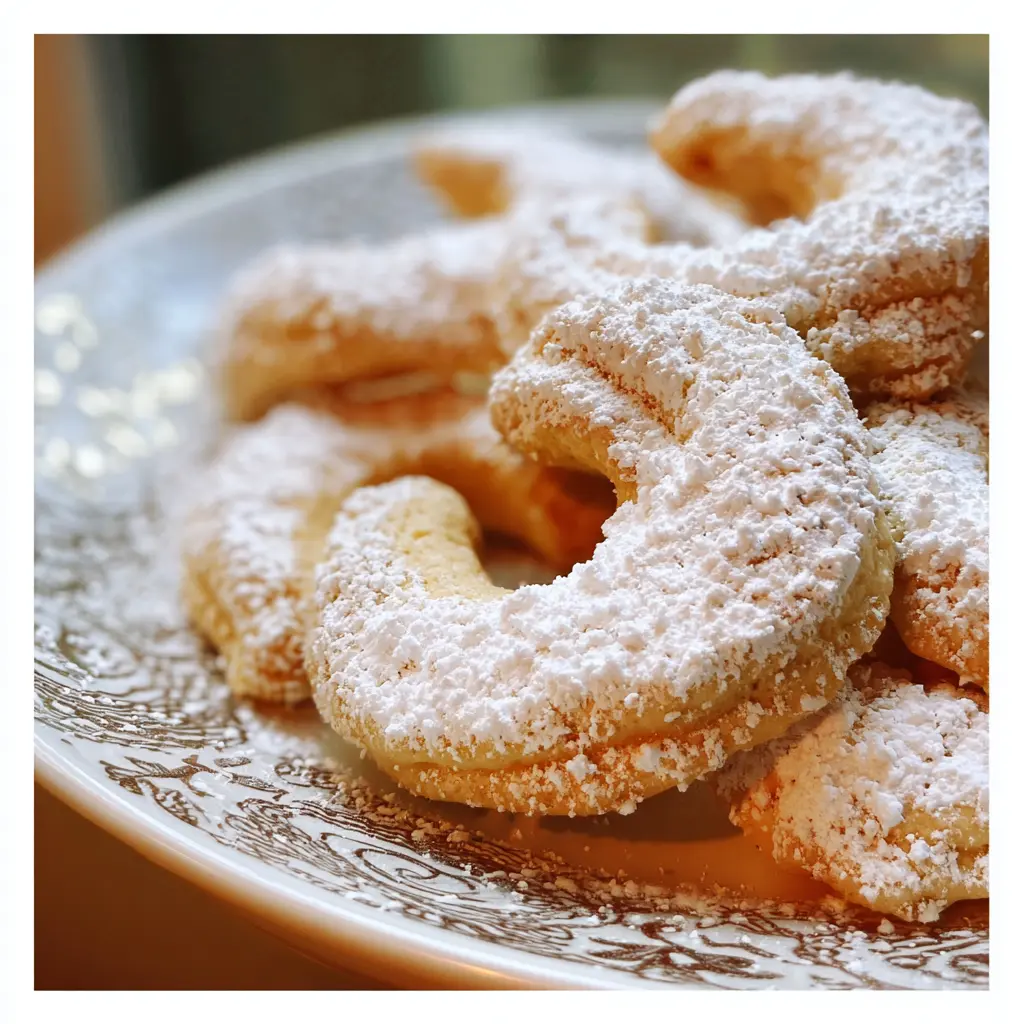
Welcome to a taste of German holiday tradition! These Vanillekipferl (German Vanilla Crescent Cookies) are an absolute delight. They boast a tender, nutty, melt-in-your-mouth texture that is simply irresistible. Popular throughout Germany, Austria, and beyond, these delicate crescent-shaped cookies are a beloved staple, especially during the festive Christmas season. Baking them brings back cherished memories and fills your home with the most wonderful aroma.
The crescent shape of Vanillekipferl is said to have originated in Vienna, symbolizing a victory celebration. Learn more about the history of Vanillekipferl and its origins in Austrian baking.
Why You’ll Love These Vanillekipferl
You are going to adore making and sharing these traditional vanilla crescent cookies. Their incredibly melt-in-your-mouth texture is truly unique. Each bite offers a rich, comforting vanilla and nutty flavor that’s perfectly balanced. These cookies are also a fantastic make-ahead option for your holiday baking. In fact, their flavor actually improves and deepens over a day or two! Plus, this Vanillekipferl recipe uses simple, accessible ingredients you likely already have on hand.
Ingredients
Gather your ingredients for these delightful German vanilla crescent cookies. You’ll need 2 cups all-purpose flour (spoon and level) and 1 pinch of salt. For richness, use 1 cup unsalted butter (cold, cut into small cubes). Sweeten the dough with ¾ cup powdered sugar. The nutty flavor comes from ¾ cup finely ground almonds (or hazelnuts or walnuts). For the signature vanilla taste, use ½ vanilla pod (seeds scraped out) or 2 tsp vanilla extract. You will also need extra ½ vanilla pod for the vanilla sugar dusting.
Notes & Substitutions
Feel free to use other finely ground nuts like hazelnuts or walnuts if almonds are not preferred for your Vanillekipferl. For the best, most authentic vanilla flavor, scrape the seeds from a fresh vanilla pod. However, 2 teaspoons of good quality vanilla extract work perfectly if a pod isn’t available. Understanding the difference between vanilla beans and vanilla extract in baking can help you choose the best option for your recipe. You can easily make homemade vanilla sugar by combining powdered sugar with the scraped-out vanilla pod in a food processor. This recipe can also be converted to metric measurements for precision.

Vanillekipferl (German Vanilla Crescent Cookies)

Equipment
- Mixing Bowl
- Baking Sheet
- Cooling Rack
Ingredients
Vanillekipferl Dough
- 1 cup unsalted butter cold, cut into pieces
- 2 cups all-purpose flour
- 1/2 cup finely ground almonds or almond flour
- 1/2 cup powdered sugar plus more for coating
- 1 tsp vanilla extract
Instructions
- In a bowl, combine flour, ground almonds, powdered sugar, and vanilla. Cut in cold butter until mixture forms a dough.
- Shape dough into a disk, wrap in plastic, and chill for 1 hour.
- Preheat oven to 350°F (175°C). Line a baking sheet with parchment paper.
- Form small crescents from dough and place on baking sheet.
- Bake for 10–12 minutes or until lightly golden on the edges.
- Cool slightly, then roll warm cookies in powdered sugar. Transfer to rack to cool completely.
Notes
Nutrition
Equipment
You will need a stand mixer fitted with a paddle attachment for easy dough mixing. Grab some plastic wrap for chilling the dough. Prepare your baking sheets and parchment paper for baking. A small food processor is optional for making vanilla sugar. Finally, an airtight container will keep your cookies fresh.
Instructions
First, in the bowl of a stand mixer fitted with the paddle attachment, combine your flour, salt, cold cubed butter, powdered sugar, ground nuts, and vanilla seeds. Mix these ingredients at medium speed until a crumbly dough forms, which usually takes about 1-2 minutes. If the dough appears too crumbly, add 1-2 tablespoons of milk, one spoonful at a time, until it just comes together.
Next, use your hands to gently press the dough together to form a cohesive ball. Wrap this dough tightly in plastic wrap and chill it in the refrigerator for at least one hour. This chilling step is crucial for easy shaping.
While the dough chills, preheat your oven to 350°F (177°C). Line one or two baking sheets with parchment paper to prevent sticking.
After chilling, take your dough and roll it into a log, approximately ½ inch thick. Cut this log into 1 ½-inch pieces. Take each piece and form it into a small cylinder, then taper the ends to create dull points. Gently bend each piece into the classic crescent shape of these Vanillekipferl. Place the formed cookies on your prepared baking sheets, leaving about 1 inch of space between each one.
Bake the Vanillekipferl one cookie sheet at a time for 12 to 15 minutes. Baking time depends on the size of your cookies. Watch them carefully; the edges should be just golden, but the cookies themselves should not brown significantly. Over-baking will make them dry.
While the cookies are baking, prepare your vanilla sugar. Scrape out the remaining vanilla pod and combine it with powdered sugar. A small food processor works wonderfully for blending these together evenly.
Once the cookies come out of the oven, immediately sift the vanilla sugar mixture generously over the hot Vanillekipferl. Let them cool completely on the baking sheet. Once fully cooled, give them a second light dusting of vanilla powdered sugar. Store your finished Vanillekipferl in an airtight container in a cool place to maintain their freshness for up to three weeks.
Pro Tips & Troubleshooting
Pro Tips:
- Keep Dough Cold: Work quickly when shaping your Vanillekipferl to prevent the dough from getting too warm. Chill it again if it becomes difficult to handle.
- Uniform Shaping: Try to shape the cookies uniformly. This ensures they all bake evenly and look beautiful.
- Avoid Over-Baking: These delicate cookies should remain pale with just slightly golden edges for that signature melt-in-your-mouth texture.
- Dust Twice: Dusting the cookies warm helps the sugar adhere, and a second dusting once cooled gives them a lovely finish.
- Store in Tins: For optimal freshness and to protect their delicate shape, store them in sturdy cookie tins.
Troubleshooting:
- Dough too crumbly: If your dough won’t come together, add milk sparingly, one teaspoon at a time, until it forms a cohesive ball.
- Cookies spreading: Ensure your dough is properly chilled. Warm dough will cause the Vanillekipferl to spread out too much in the oven.
- Cookies breaking: These are delicate! Handle the baked cookies very gently, especially when warm and when transferring.
Serving, Storage & Variations
Serving Suggestions:
These delightful Vanillekipferl are perfect served with a warm cup of coffee or tea, especially during the holidays. Arrange them beautifully on a festive cookie platter to share with friends and family. Their elegant shape makes them a wonderful addition to any dessert spread.
Storage:
Store your baked Vanillekipferl in an airtight container at room temperature. Keep them in a cool, dry place away from direct sunlight. They will stay fresh and delicious for up to 3-4 weeks. For longer storage, you can freeze the baked cookies in an airtight container for up to 3 months. Alternatively, freeze the unbaked dough logs, wrapped tightly, for up to 1 month. Thaw before slicing and baking.
Variations:
Experiment with different ground nuts for your Vanillekipferl. Try using finely ground walnuts or pecans for a different flavor profile. For an extra special touch, you can dip the cooled ends of the cookies in melted dark or white chocolate. Sprinkle with festive nonpareils before the chocolate sets for a decorative finish.
Nutrition
These Vanillekipferl are a delightful treat. Here is an estimated nutritional breakdown per serving based on the recipe. Please note that exact values can vary depending on specific ingredient brands and preparation methods.
| Nutrient | Amount (per serving) |
|---|---|
| Calories | 110 kcal |
| Carbohydrates | 11g |
| Protein | 2g |
| Fat | 7g |
| Saturated Fat | 4g |
| Cholesterol | 20mg |
| Sugar | 6g |
| Potassium | 30mg |
| Vitamin A | 150IU |
| Calcium | 20mg |
| Iron | 0.5mg |
Conclusion
Baking Vanillekipferl (German Vanilla Crescent Cookies) brings a touch of old-world charm and deliciousness into your home. Their simple preparation belies a truly delightful texture and rich vanilla-nut flavor that will captivate everyone who tries them. I hope you enjoy the process of creating these traditional treats and sharing them with loved ones. Don’t forget to leave a comment below and rate the recipe once you’ve tried it!
FAQ
What are Vanillekipferl?
Vanillekipferl are traditional German and Austrian vanilla crescent cookies, known for their tender, nutty, melt-in-your-mouth texture and powdered sugar coating. They are especially popular during Christmas.
Do Vanillekipferl contain eggs?
No, traditional Vanillekipferl recipes, including this one, do not typically contain eggs, making them a great option for those avoiding eggs.
Which nuts work best for Vanillekipferl?
Finely ground almonds are traditional, but hazelnuts or walnuts also work wonderfully and provide a slightly different flavor profile.
How do I make vanilla sugar at home?
Simply combine powdered sugar with the scraped-out seeds and pod of a vanilla bean in a small food processor until finely blended.
Why are my Vanillekipferl falling apart?
They are delicate cookies! Ensure your dough is cold enough for shaping, avoid over-baking, and handle them very gently, especially when warm.
Can I freeze Vanillekipferl cookies or dough?
Yes, you can freeze baked cookies for up to 3 months or freeze the raw dough logs, wrapped tightly, for up to 1 month.
How long do Vanillekipferl stay fresh?
When stored in an airtight container in a cool, dry place, these cookies will stay fresh for about 3-4 weeks.