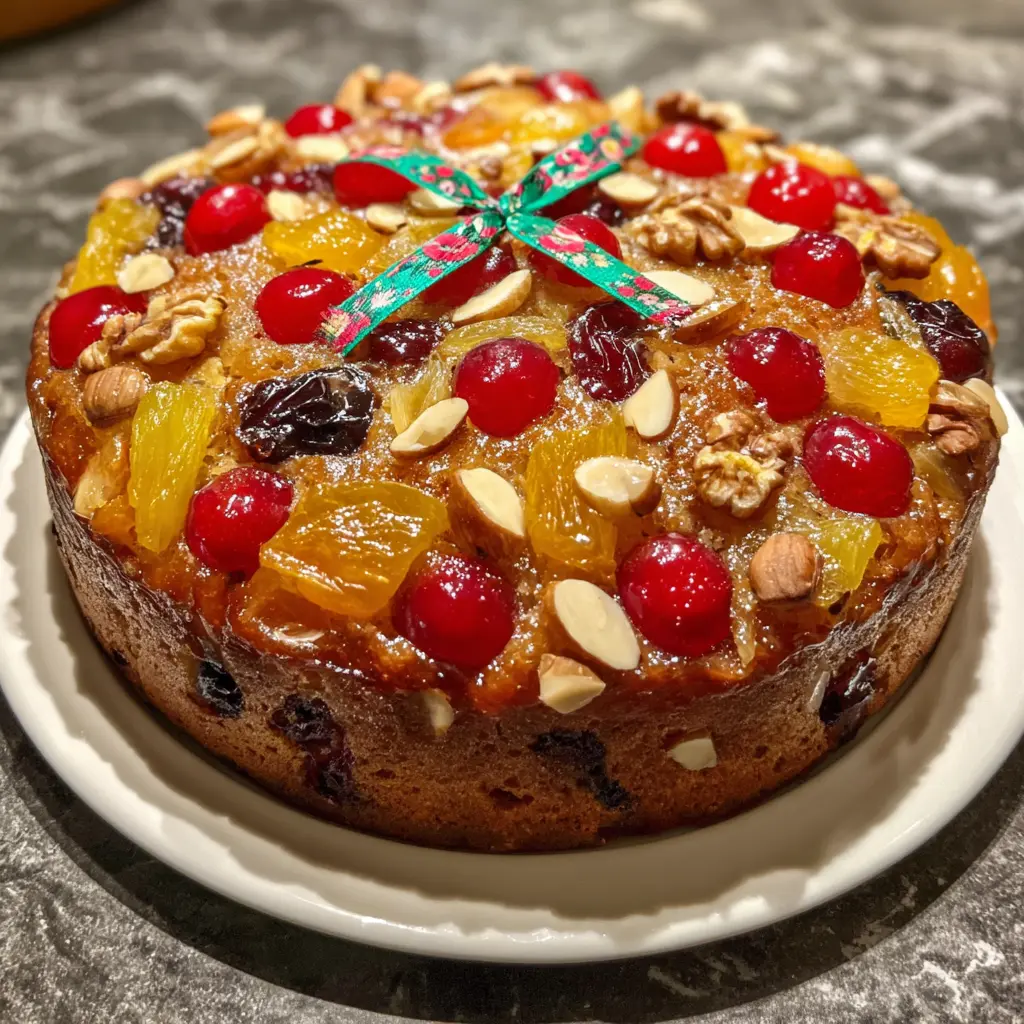
Welcome to a truly special recipe that brings festive cheer to any home! This Mary’s Christmas Genoa Cake is a beloved classic, perfect for celebrating the holiday season. It boasts a wonderfully rich profile, packed with succulent fruits and crunchy nuts, all baked into a tender, moist crumb. Get ready to bake a delicious traditional treat that everyone will adore.
Why You’ll Love Mary’s Christmas Genoa Cake
This festive fruitcake offers many reasons to become your new holiday favorite.
- It brings a delightful touch of traditional Christmas charm to your table, evoking warm memories.
- You will love its wonderfully rich, moist, and tender texture, unlike denser fruitcakes.
- Mary Berry’s expert instructions are incredibly easy to follow, making this Genoa cake suitable for all skill levels.
- This cake is perfect for making ahead, allowing flavors to deepen beautifully over time.
- It serves as an impressive and elegant center-piece for all your holiday gatherings.
Ingredients
Gather these quality ingredients to create your beautiful Mary’s Christmas Genoa Cake. Using fresh, good-quality components makes a noticeable difference in the final taste and texture.
For the Cake:
- 350g red or natural glacé cherries
- 225g can of pineapple in natural juice, drained
- 50g ready-to-eat dried apricots
- 100g blanched almonds, roughly chopped
- Finely grated rind of 2 lemons
- 350g sultanas
- 250g unsalted butter, softened
- 250g caster sugar
- 5 large eggs, lightly beaten
- 250g self-raising flour
- 75g ground almonds
For Decoration:
- Blanched whole almonds
- Walnut halves
- Red or natural glacé cherries
- 50g whole orange peel (available from health food shops)
- 100g apricot jam
- Colored ribbon, for presentation
Notes & Substitutions
You can easily adapt this recipe to your preferences. For glacé cherries, choose either vibrant red or more subtle natural ones. Feel free to substitute dried fruit like cranberries, currants, or chopped dates for some of the sultanas. If you prefer different nuts, pecans or hazelnuts work wonderfully in place of almonds. If you do not have self-raising flour, combine 250g plain flour with 2.5 teaspoons of baking powder. Always use good quality unsalted butter for the best flavor and texture.

Mary’s Christmas Genoa Cake

Equipment
- Loaf Tin
- Mixing Bowl
Ingredients
Fruit Mix
- 175 g glacé cherries halved
- 175 g raisins
- 175 g sultanas
- 50 g candied peel chopped
Cake Base
- 175 g unsalted butter softened
- 175 g caster sugar
- 3 eggs beaten
- 175 g self-raising flour sifted
- 50 g ground almonds
- 25 g blanched almonds whole, for topping
Instructions
- Preheat the oven to 150°C (300°F). Grease and line a loaf tin with parchment paper.
- In a large bowl, cream the butter and sugar until light and fluffy.
- Gradually beat in the eggs, one at a time, adding a little flour if the mixture curdles.
- Fold in the flour and ground almonds, then stir in the dried fruits and candied peel.
- Spoon the mixture into the prepared tin and smooth the top. Decorate with whole blanched almonds.
- Bake for 1 hour 30 minutes or until a skewer inserted into the center comes out clean.
- Cool in the tin for 10 minutes, then turn out onto a wire rack to cool completely.
Notes
Nutrition
Equipment
Having the right tools makes baking this Genoa cake a breeze.
- A 23cm deep round cake tin ensures a perfectly shaped cake.
- Baking parchment helps prevent sticking and ensures easy removal.
- A sieve is essential for sifting flour and straining jam.
- A food mixer or electric whisk makes creaming butter and sugar much quicker.
- A wire cooling rack allows air circulation for even cooling.
Instructions
Follow these clear, step-by-step instructions to bake your delightful Mary’s Christmas Genoa Cake. Precision in each step ensures a perfect outcome, so take your time and enjoy the process.
Step 1: Prepare Oven and Tin.
Pre-heat your oven to 325°F (160°C) or 140°C fan/Gas 3. This ensures the oven is at the correct temperature before the cake goes in. Thoroughly grease a 23cm deep round cake tin, then double-line it with baking parchment. Make sure the parchment extends a little above the rim of the tin to protect the cake from over-browning.
Step 2: Prepare Fruit and Nuts.
First, quarter your glacé cherries. Rinse them thoroughly under cold water and then drain them well to remove excess sugar and stickiness. Chop the drained pineapple into small pieces, ensuring it is very dry. Snip the dried apricots into similarly small pieces. Roughly chop your blanched almonds. Combine all these prepared fruits and nuts with the finely grated lemon rind and sultanas in a large bowl. Dust them lightly with a spoonful of flour from your measured amount; this helps prevent the fruit from sinking during baking.
Step 3: Mix the Cake Batter.
In a large mixing bowl, cream the softened unsalted butter and caster sugar together until the mixture is light, fluffy, and pale. This step incorporates air, making the cake lighter. Gradually add the lightly beaten eggs, a little at a time, along with a spoonful of the self-raising flour with each addition. This technique helps prevent the batter from curdling. Once the eggs are fully incorporated, gently fold in the remaining self-raising flour and the ground almonds using a large metal spoon or spatula. Be careful not to overmix, as this can develop the gluten and make the cake tough. Finally, gently fold in your prepared fruit and nut mixture until everything is just combined.
Step 4: Decorate and Bake.
Pour the rich cake batter into your prepared cake tin, spreading it evenly with the back of a spoon. Level the surface carefully to ensure even baking. Now, arrange your decorative blanched whole almonds, walnut halves, extra glacé cherries, and whole orange peel artistically on top of the batter. This creates a beautiful finish. Bake the cake in your pre-heated oven for approximately 2 1/4 hours. After the first hour, check the cake; if the top is browning too quickly, loosely cover it with a piece of foil to prevent further darkening.
Step 5: Cool and Finish.
To test for doneness, insert a thin skewer into the center of the cake; it should come out clean. Once baked, remove the cake from the oven and let it cool in the tin for about 30 minutes. This allows the cake to firm up before handling. Carefully turn the cake out onto a wire cooling rack and gently remove all the baking parchment. While the cake cools, warm the apricot jam in a small saucepan over low heat until it becomes runny. Pass the warm jam through a sieve to remove any lumps, making it smooth. Brush the warm, sieved jam generously over the top of the cake; this gives it a lovely glaze and helps preserve it. Once the Mary’s Christmas Genoa Cake is completely cool, tie a festive colored ribbon around its sides for a beautiful presentation.
Pro Tips & Troubleshooting
Achieve the perfect Christmas Genoa Cake with these expert tips.
- Preventing Sinking Fruit: Always toss your prepared fruit and nuts in a spoonful of flour before adding them to the batter. This light coating helps them stay suspended evenly throughout the cake as it bakes.
- Perfectly Creamed Butter & Sugar: Ensure your butter is truly softened at room temperature. Cream it with the sugar until it’s very light and fluffy; this step is crucial for an airy crumb.
- Avoiding Curdled Batter: Add your beaten eggs slowly, a little at a time, incorporating a spoonful of flour with each addition. This emulsion technique prevents the mixture from splitting.
- Achieving Golden Brown Crust: Monitor your oven closely. If the cake top browns too quickly before it’s cooked through, simply cover it loosely with foil for the remainder of the baking time.
- Testing for Doneness: A thin skewer inserted into the thickest part of the cake should come out completely clean, with no wet batter clinging to it. This indicates the cake is fully baked.
Serving, Storage, and Variations
This classic fruitcake is versatile and keeps beautifully.
Serving Suggestions:
Serve slices of this delightful Genoa cake as a festive treat, perfect with your afternoon tea or coffee. It also makes a wonderful dessert after a holiday meal, perhaps with a dollop of cream.
Storage:
Store your Christmas Genoa Cake in an airtight container in a cool, dark place. This cake benefits from aging; it will keep well for several weeks, and even months if wrapped tightly. For longer storage, wrap it securely in several layers of cling film and then foil, then freeze for up to 6 months. Thaw completely at room temperature before serving.
Variations
- Nutty Twist: Experiment by substituting some of the blanched almonds with chopped pecans or walnuts for a different flavor profile.
- Citrus Zest: Add the zest of an orange or lime along with the lemon for a brighter, more complex citrus aroma.
- Alcoholic Soak: For an adult twist, drizzle the cooled cake with a few tablespoons of brandy, rum, or Cointreau. Wrap it well and let it mature.
- Glaze Options: Instead of apricot jam, create a simple icing sugar glaze mixed with lemon juice for a different look and taste.
Nutrition
Homemade cakes, like this rich Genoa cake, offer a wonderful taste of tradition and are often richer than everyday treats. This particular recipe contains a significant amount of fruit, nuts, and butter. For precise nutritional information, consider using an online nutrition calculator, inputting the exact ingredients and quantities. Calorie and macronutrient contributions will primarily come from the butter, sugar, dried fruits, and nuts in each slice.
| Nutrient | Per serving (estimated) |
|---|---|
| Calories | 400-500 kcal |
| Protein | 5-7g |
| Fat | 20-30g |
| Carbohydrates | 50-60g |
| Fiber | 2-4g |
Conclusion
Baking Mary’s Christmas Genoa Cake is a truly rewarding experience, filling your home with wonderful festive aromas. Its delicate crumb, rich fruits, and elegant presentation make it a perfect choice for holiday celebrations. We encourage you to try this traditional recipe and share the joy with your loved ones. Get baking and let us know your favorite part in the comments below!
FAQ
You might have a few questions about making this classic bake.
What is a Genoa cake?
The Genoa cake, originating in Italy, is a traditional fruitcake that offers a lighter texture compared to other holiday fruitcakes. Learn more about the history of Genoa cake.
Can I make this cake ahead of time?
Absolutely, this Mary’s Christmas Genoa Cake is ideal for making ahead! Its flavors deepen and become even more wonderful after a week or two of maturing.
How do I prevent the fruit from sinking?
To keep your fruit evenly distributed, lightly dust all your prepared dried fruit and nuts with a spoonful of flour before folding them into the batter. This helps them float during baking.
What if I don’t have self-raising flour?
You can easily make your own self-raising flour substitute. For every 250g of plain flour, simply whisk in 2.5 teaspoons of baking powder.
How long will Mary’s Christmas Genoa Cake keep?
When stored in an airtight container in a cool, dark place, this cake keeps well for several weeks. It can also be frozen for up to 6 months.